
📑 Table of Contents
- Introduction
- Evolution of Door Security
- How Video Door Phone Systems Work
- Security Benefits
- Hospitality Revolution
- Choosing the Right System
- Installation and Setup
- Real-World Success Stories
- Emerging Technologies
- Maintenance Guide
- Privacy Considerations
- Cost-Benefit Analysis
- Conclusion
🚪 Introduction: The Doorbell Revolution
It’s 10 PM on a Friday night. Your doorbell rings unexpectedly. In the past, you would have to either:
- Look through a peephole (limited field of view, dark at night)
- Open the door blindly (potential security risk)
- Not answer (uncomfortable for expected guests)
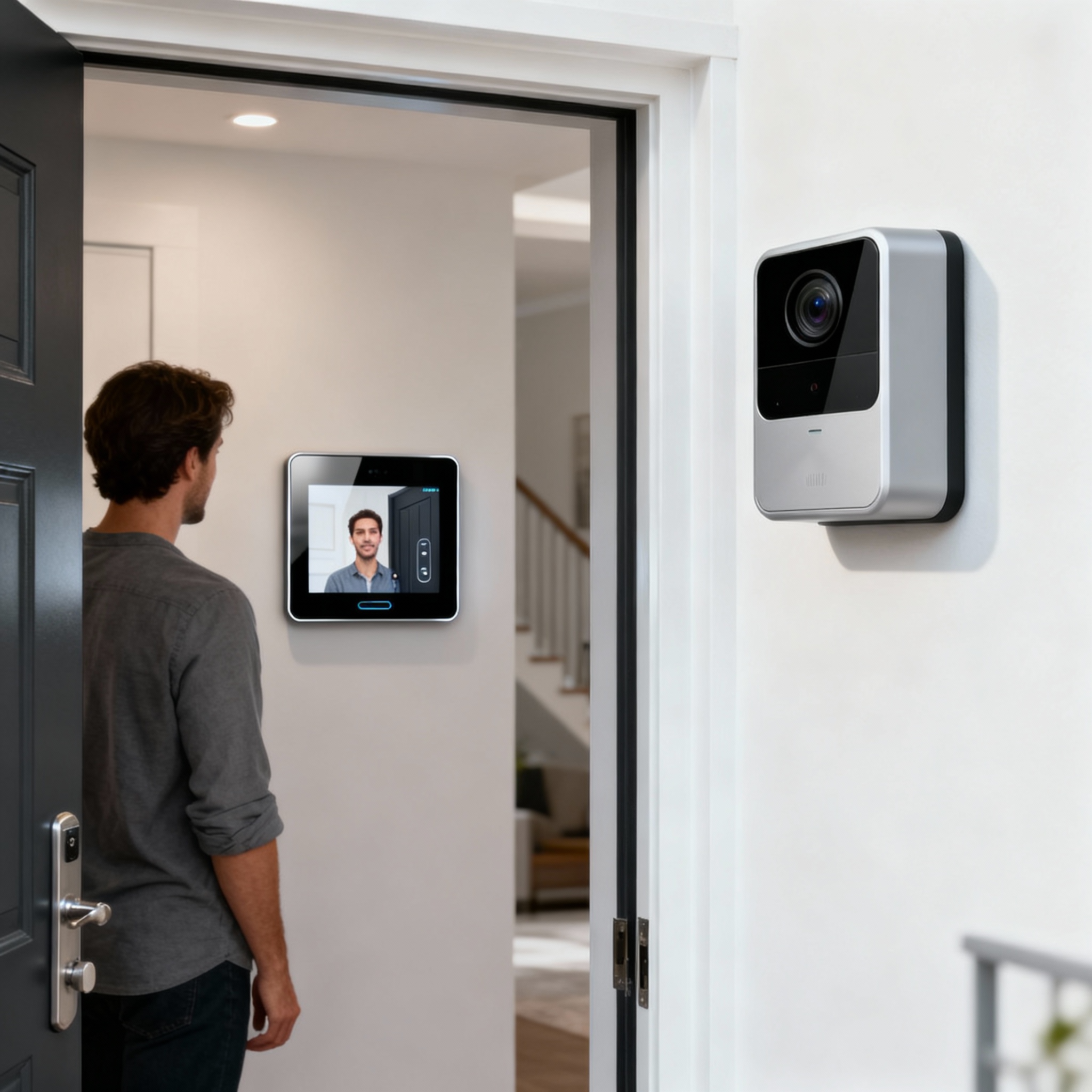
Today, with a video door phone system, you simply glance at your smartphone—or the indoor monitor mounted on your wall. You see crisp, full-color video of the visitor in real-time. You hear them through crystal-clear audio. You can communicate back through two-way speakers. And only after fully assessing the situation do you decide whether to unlock the door.
The video door phone market in India is experiencing explosive growth. The market reached USD 56.2 million in 2024 and is projected to reach USD 200.9 million by 2033—a remarkable 15.20% compound annual growth rate.
This comprehensive guide explores the evolution of video door phone technology, how modern systems work, their transformative impact on home security and daily life, and how to choose the right system for your specific needs.
📚 The Evolution of Door Security: From Peepholes to Smart Surveillance
Traditional Door Security Methods and Their Limitations
For centuries, the peephole was the only way to see who was at the door before opening it. Let’s examine its limitations:
Peephole Limitations:
- Poor Night Vision: You see little more than a silhouette
- Limited Field of View: Only see what’s directly in front
- Distortion: Fisheye lens creates significant image distortion
- Vulnerability: Security risk if someone knows you’re looking
- No Recording: No evidence if something goes wrong
- No Communication: Must open door to speak with visitors
The Birth of Video Door Phones
The first video door phone systems appeared in the 1990s, primarily in high-end residential and commercial properties. However, these early systems were bulky, expensive (₹50,000-1,00,000+), unreliable, and required extensive installation.
The Smart Revolution (2015-Present)
The integration of IoT, cloud connectivity, AI, and improved manufacturing has transformed video door phones:
Modern Video Door Phone Advantages:
- HD and 4K video in crystal-clear color day and night
- Affordable systems (₹8,000-25,000 vs. ₹50,000+ previously)
- Mobile app control from anywhere in the world
- Wireless installation reducing complexity
- Cloud storage with automatic footage backup
- AI features including motion detection and package detection
- Two-way audio with clear voice communication
- Integration with smart locks for remote unlock capability
⚙️ How Video Door Phone Systems Work: The Technology
System Architecture
A comprehensive video door phone system consists of several integrated components:
1. Outdoor Camera Unit (Doorbell Camera)
Resolution Options:
- 1080p HD (2MP): Standard definition; adequate for most uses
- 2K/4MP: Higher clarity; recommended for identification
- 4K/8MP: Ultra-high definition; zoom while maintaining clarity
Key Features:
- 120-180 degree wide-angle lens
- IR LEDs for night vision (5+ meter range)
- Motion detection triggering alerts
- Weather-sealed (IP65/IP67 rating)
- Operating temperature: -20°C to +60°C
- 30 fps video frame rate (smooth, cinematic)
2. Indoor Monitor/Receiver Unit
Display Options:
- 7-inch TFT Touchscreen (most common)
- 10-inch Touchscreen (larger display)
- Multiple monitors (different rooms)
Features: Full-color video, high-quality speaker and microphone, touch controls, call history, status indicators
Power Options: Battery-operated (wireless), AC powered (continuous), or hybrid systems
3. Communication Hub
The central processor managing the system with local processing, cloud connectivity, mobile app integration, smart home communication, and 128+ bit encryption.
4. Mechanical Lock Integration (Optional)
Many systems include or integrate with electric door locks for controlled access.
How the System Operates: Real-Time Walkthrough
- Motion Detection: Outdoor camera detects movement, begins recording
- Video Transmission: HD video streams to monitor and mobile app
- Notification Alert: Smartphone receives instant notification
- Video Review: You check camera view on phone or monitor
- Guest Recognition: Identify if person is expected
- Decision Making: Decide whether to allow entry
- Communication: Speak through two-way audio if needed
- Unlocking: Remotely unlock if appropriate
- Entry: Visitor enters; door auto-locks after few seconds
- Recording: Entire interaction recorded for future reference
🛡️ Security Benefits: Beyond Simple Visibility
The Barrier to Entry Psychology
A video door phone signals three critical things to potential criminals:
- You will be identified: Clear video enables police identification
- Your actions are recorded: Evidence will be available
- You will be captured on video: Significant barrier to criminal action
Prevention of Common Home Security Threats
1. Burglary Prevention
Visible video door phones indicate professional security, encouraging criminals to target easier alternatives.
2. Delivery Package Theft (Porch Piracy)
You can instruct delivery personnel where to leave packages, monitor their placement, and have video evidence if theft occurs. Data from US cities shows neighborhoods with visible package security experience 10-15% fewer thefts.
3. Unwanted Solicitation Prevention
Verify credentials, deny entry without opening door, document aggressive incidents, report to authorities with video evidence.
4. Vandalism Prevention
Visible cameras deter vandals; footage enables identification and prosecution.
5. Hazard Identification
Identify suspicious individuals, verify legitimacy of service providers, assess emergency situations before responding.
🏨 The Hospitality Revolution: Commercial and Residential Applications
Residential Applications: Multifamily Housing
Apartment buildings and residential societies have embraced video door phone systems:
Benefits for Residents:
- Know exactly who is entering your building
- Welcome guests remotely
- Monitor delivery personnel; ensure packages secured
- Video documentation of all entries
- Emergency response with real-time visibility
Benefits for Building Management:
- Reduced liability through documentation
- Staff accountability verification
- Instant incident resolution through footage
- Insurance premium reduction
- Enhanced property value (security justifies premium pricing)
Commercial Applications: Hotels, Restaurants, Offices
Hotels: Room security verification, employee access control, evidence collection, lost and found documentation
Restaurants: Guest verification at entrance, reservation disputes, capacity disputes, after-hours access control
Offices: After-hours access verification, executive protection, visitor management, emergency assessment
🔍 Choosing the Right Video Door Phone System
Assessment Questionnaire
- What is your primary use case? (home security, guest management, package protection, commercial)
- What is your budget? (entry-level: ₹5,000-8,000 | mid-range: ₹8,000-15,000 | premium: ₹15,000-25,000+)
- What is your WiFi situation? (strong, weak, or non-existent)
- Do you need door lock integration? (Yes or No)
- Are you a renter or owner? (affects installation options)
- What installation capability do you have? (DIY or professional)
Key Specifications to Compare
| Specification | Good Standard | Excellent Standard |
|---|---|---|
| Resolution | 1080p/2MP | 2K or 4K/8MP |
| Night Vision Range | 5 meters | 10+ meters |
| Field of View | 120 degrees | 160+ degrees |
| Video Storage | Local only | Local + cloud |
| Mobile Access | App included | App + SMS alerts |
| Response Time | <500ms | <200ms |
| Door Lock Integration | Not available | Fully integrated |
| Warranty | 1-2 years | 3+ years |
🔧 Installation: DIY vs. Professional
DIY Installation (Wireless Systems)
Suitable For: Renters, tech-savvy individuals, simple installations
Steps: Charge battery, download app, connect to WiFi, mount camera, configure settings, place indoor monitor
Time Required: 1-2 hours
Cost: No additional labor
Professional Installation (Wired Systems)
Suitable For: Homeowners seeking integration, complex installations, business settings
Cost: ₹2,000-10,000+ depending on complexity
Timeline: 2-4 hours typically
Advantages: Proper integration, optimal placement, warranty coverage, professional support
📖 Real-World Success Stories
Case Study 1: The Working Woman’s Peace of Mind
Priya, 28-year-old software engineer in Bangalore living alone, travels for work 1-2 weeks at a time. Before installing a video door phone, she worried about service provider access. After installation, she can see and speak with providers before allowing entry, grant one-time access codes, receive instant alerts, and have video documentation. “The system has completely transformed my confidence,” she reports.
Case Study 2: The Apartment Society Transformation
Lakeside Residential Society (450 units) implemented building-wide video door phone and turnstile systems. Results: 60% reduction in security personnel (saving ₹15,00,000 annually), 90% reduction in package theft, instant conflict resolution, 30% increase in property values.
Case Study 3: The Commercial Protection Success
High-end Mumbai restaurant installed video door phone system. Results: 70% reduction in billing disputes, improved employee training, prevention of late-night intrusions, enhanced guest experience.
🚀 The Future of Video Door Phone Technology
Emerging Capabilities
- Facial Recognition: Automatically identify known family members
- Package Detection: Analyze characteristics; suggest optimal placement
- Autonomous Verification: AI systems verify credentials without homeowner intervention
- Emergency Integration: Automatic 911 calls with real-time video during emergencies
- Augmented Reality: 3D rendering of monitored areas; heat maps of activity
🔧 Maintenance and Troubleshooting
Regular Maintenance Schedule
- Monthly: Test video quality; clean camera lens; verify motion detection; test two-way audio
- Quarterly: Check night vision; verify mobile notifications; test door lock integration; update firmware
- Annually: Professional inspection; battery testing; water seal inspection; complete functionality test
Common Issues and Solutions
| Issue | Solution |
|---|---|
| Blurry Video | Clean camera lens; check focus settings; reposition if backlit |
| No WiFi Connection | Move WiFi router closer; check WiFi password; restart system; consider WiFi extender |
| Night Vision Not Working | Check IR LED operation; clean lens; verify night mode; check for reflective obstructions |
| Mobile App Not Receiving Alerts | Check internet connection; reinstall app; verify notifications; update firmware |
| Slow Video Streaming | Check WiFi signal strength; reduce resolution; move router closer; check internet speed |
🔒 The Privacy Consideration: Balancing Security with Respect
Ethical Considerations
While video door phones provide tremendous security benefits, ethical use requires:
- Visible Notice: Signage indicating video recording
- Limited Recording Scope: Capture only entrance area, not adjacent properties
- DPDP Compliance: Following India’s 2023 data protection law
- Access Controls: Limiting who can view footage
- Retention Policies: Deleting routine footage after 30-90 days
- Regulatory Compliance: Verifying local regulations
💰 Cost-Benefit Analysis
Financial Benefits
- Insurance premium reductions (5-10%)
- Package theft prevention (₹5,000-20,000 avoided losses)
- Burglary prevention (average residential loss: ₹1,00,000+)
Non-Financial Benefits
- Peace of mind (invaluable)
- Remote guest management
- Documentation for disputes and insurance
- Quick guest verification (10+ seconds saved per visit)
ROI Timeline
A system costing ₹10,000-15,000 pays for itself within:
- 2-3 years through insurance discounts alone
- 1 year if any theft or fraud is prevented
- Immediate in terms of psychological peace of mind
✅ Conclusion: The Modern Home’s Essential Security Tool
Video door phones have evolved from luxury accessories to essential home security infrastructure. The technology delivers measurable security benefits, unmatched convenience, and integration with smart home ecosystems. With India’s video doorbell market projected to reach USD 200.9 million by 2033, this technology is transitioning from early adopters to mainstream homeowners.
For Indian families concerned about security, managing frequent guests, protecting valuable packages, or simply adding convenience to daily life, video door phone systems represent a prudent investment. The combination of enhanced security, operational convenience, and integration with modern smart home ecosystems creates compelling value.
The question is no longer whether to install a video door phone, but which system best aligns with your specific needs, budget, and setup. With options ranging from ₹5,000 to ₹25,000, quality systems are now accessible to middle-class Indian families.
Welcome your future visitors with confidence. The video door phone revolution is here.
Enhance Your Home Security Today
Discover our complete range of video door phone systems and smart security solutions.
Our experts will help you find the perfect system for your home or business.
📚 References & Sources
- India Video Doorbell Market Analysis and Forecast – IMARC Group, 2024
- Smart Home Security and Crime Prevention – Mordor Intelligence and Gartner Research, 2024
- Package Theft Prevention and Video Security Effectiveness – Retail Research Studies, 2024
- Digital Personal Data Protection Act (DPDP) 2023 – Government of India
- Smart Home Market Adoption Trends – India Smart Home Market Report, 2025
- Video Doorbell Technology Specifications – Consumer Electronics Data, 2024
- Home Security Technology Adoption Rates – Market Research Reports, 2024