
📑 Table of Contents
- Introduction
- Understanding Turnstiles
- Types of Turnstiles
- Core Components
- Applications Across India
- Prevention vs. Detection
- Smart Facility Integration
- Challenges and Solutions
- System Design Best Practices
- ROI and Cost Analysis
- Future Technologies
- Conclusion
🏗️ Introduction: Securing Modern Access Control
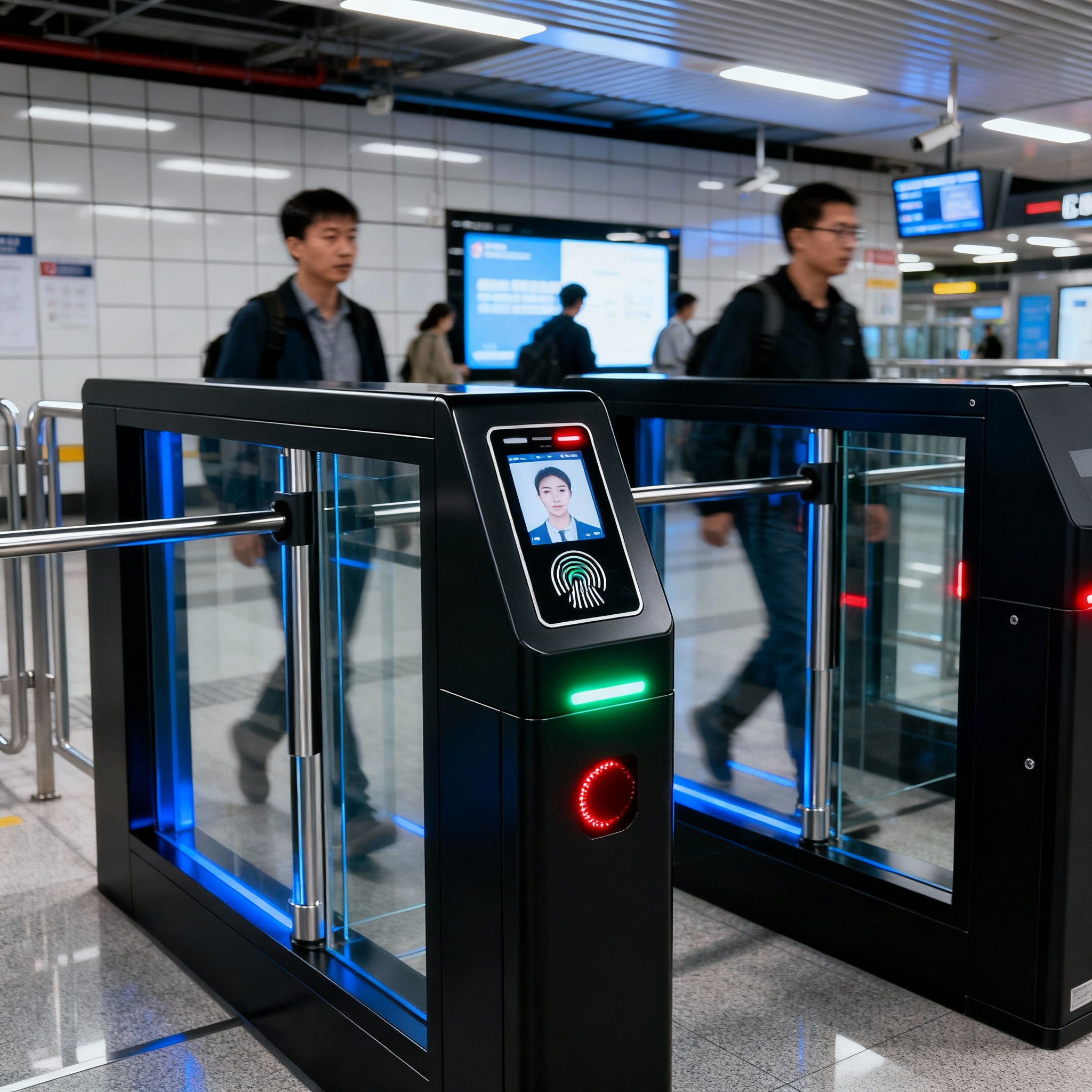
Imagine a bustling metro station during rush hour. Thousands of commuters flow through gates in a seemingly choreographed dance. No tickets are manually checked. No gates are manually operated. Yet each person passes through only if they have valid credentials. Within milliseconds, the system verifies access, logs the entry, captures biometric data, and triggers alerts if suspicious activity is detected.
This isn’t science fiction—it’s the reality of modern turnstile technology deployed across Indian metro systems, corporate offices, shopping centers, and event venues. Turnstiles represent the intersection of physical security, access control, and intelligent automation—technologies that are fundamentally reshaping how organizations manage the flow of people and information.
As India races toward becoming a technology-driven economy with 100+ smart cities in development, turnstile technology is becoming increasingly essential infrastructure. This comprehensive guide explores how turnstiles work, their applications across diverse Indian settings, and how they’re creating safer, more efficient communities.
🎯 Understanding Turnstiles: More Than Just Gates
What is a Turnstile?
A turnstile is a specialized access control device designed to regulate the flow of people through a secured entry or exit point. Rather than a simple gate that opens freely, a turnstile operates on a credential-based system: only authorized individuals are permitted passage.
Modern turnstiles are far more sophisticated than the mechanical revolving doors of the past. Contemporary systems integrate advanced access control technologies, biometric authentication systems, real-time monitoring and logging, emergency override mechanisms, and integration with building management systems.
Think of a turnstile as the physical manifestation of a digital access control database. When you present your credential (card, fingerprint, facial recognition), the system queries the database, verifies your authorization, and physically permits your passage.
Why Turnstiles Matter in Modern Security
Advantages of Turnstiles:
- Scalability: Process hundreds of people per hour without human intervention
- Accountability: Every passage logged with timestamp, user ID, and access method
- Consistency: Non-human, eliminating corruption and lapses
- Deterrence: Visible presence signals professional security infrastructure
🚪 Types of Turnstiles: A Comprehensive Overview
1. Mechanical Tripod Turnstiles
How They Work: Three rotating arms (tripod configuration) allow one person at a time. Arms lock until credential is re-presented.
| Aspect | Details |
|---|---|
| Advantages | Extremely durable, no power required, low maintenance, cost-effective |
| Disadvantages | Manual verification needed, cannot track individuals, limited integration |
| Ideal Use | Remote facilities, non-secure areas with basic access control |
2. Flap Barrier Turnstiles
How They Work: Horizontal barriers swing open upon credential verification, then automatically close.
Key Benefits:
- High-speed throughput (40-60 people per minute)
- Elegant, modern aesthetic
- Suitable for indoor high-traffic areas
- Accessible for mobility-impaired individuals
Ideal Use: Office buildings, shopping centers, apartment buildings, retail stores
3. Full-Height Turnstiles
How They Work: Vertical barriers extending floor to ceiling create physical barrier solenoid-operated.
Security Profile:
Maximum security (virtually impossible to bypass), very intimidating presence, excellent for high-risk areas, handles rough use. Cost: ₹1,00,000-3,00,000+ per unit.
Ideal Use: Banks, government facilities, data centers, military installations, high-security events
4. Swing Gate Barriers
Single or double-swing gates (like traditional doors) open upon credential verification. Excellent accessibility, dual-direction capability, scalable. Ideal for hospitals, public buildings, accessible facilities.
5. Sliding Barriers
Horizontal barriers slide open sideways upon credential verification. Excellent throughput (highest among horizontal systems), smooth operation, modern aesthetic. Ideal for premium corporate offices, luxury residential buildings, high-end retail.
6. Optical/Sensor-Based Turnstiles
Infrared sensors detect individuals without physical contact. Entry regulated through gates or barriers. Movement within optical zone monitored. Hygienic (post-pandemic important), accessibility-friendly, fast operation. Ideal for hospitals, public health facilities, high-traffic spaces.
⚙️ Core Components of Turnstile Systems
1. Access Control Readers
The credential verification device determining if access is granted:
- RFID Card Readers: Proximity cards scanned within 10-15 cm
- Biometric Readers: Fingerprint, facial recognition, iris, palm vein
- Mobile/NFC Readers: Smartphone digital passes
- PIN/Keypad Entry: Personal identification numbers
- QR Code Scanners: Temporary access and events
2. Electronic Control Systems
The intelligent system managing turnstile operation:
- Microprocessor-based controllers managing logic and authorization
- Cloud-based systems with centralized management
- Offline capability for internet outages
- Multi-factor authentication support
3. Monitoring and Analytics
- Real-time occupancy tracking
- Access logs and audit trails
- Behavior analytics detecting suspicious patterns
- Emergency system integration
- Automatic attendance reporting
4. Emergency Override Systems
Critical safety mechanisms:
- Manual override keys for security personnel
- Emergency push buttons for rapid evacuation
- UPS systems maintaining operation during power outages
- Fire system integration opening turnstiles automatically
🌆 Turnstiles Across India: Diverse Applications
Application 1: Metro and Mass Transit Systems
India’s metro systems are among the world’s most advanced in access control. Delhi Metro, Mumbai Metro, and Bangalore Metro have deployed turnstile systems handling millions of commuters daily.
System Benefits:
- Prevents fare evasion (estimated loss: ₹10+ crores annually)
- Automatic attendance tracking
- Peak demand management
- Emergency lockdown capability
Application 2: Corporate Office Buildings
Multinational corporations and IT parks use turnstiles for access control and employee tracking. Biometric turnstiles (fingerprint most common) at main entrances, with card-based systems for backup, enable accurate time tracking eliminating buddy punching and unauthorized after-hours access detection.
Application 3: Residential Communities
Apartment complexes and gated communities increasingly use turnstiles for entry control. Main gates have high-security full-height turnstiles, secondary gates use less restrictive flap barriers, integration with society apps enables visitor pre-registration and optional CCTV integration.
Application 4: Retail and Shopping Centers
High-end malls and retail chains use turnstiles strategically at employee entrances (preventing internal theft), optical sensors for public area counting, integration with loss prevention systems.
Application 5: Banks and Financial Institutions
Banks implement high-security full-height turnstile systems protecting customer assets, with biometric systems for restricted areas, multiple authentication methods, and integration with security control centers.
Application 6: Event Management and Large Gatherings
Stadiums, theaters, and festivals use rapid-throughput flap barriers managing visitor flow with QR code scanning for ticket verification, real-time capacity monitoring, and emergency system integration.
Application 7: Data Centers and High-Security Facilities
Mission-critical facilities require multi-factor biometric authentication, full-height barriers with anti-tailgating sensors, CCTV and alarm system integration, and cellular backup for connectivity.
.
🛡️ Turnstile Technology: Prevention vs. Detection
Access Prevention
Unlike CCTV that detects crime after it happens, turnstiles prevent unauthorized access entirely. A person without valid credentials simply cannot pass through. No discretionary decision-making (unlike human guards), no social engineering can overcome properly programmed systems, and tailgating detection alerts security personnel.
Anti-Tailgating Technology
Modern Anti-Tailgating Mechanisms:
- Sensor-Based Detection: Infrared or pressure sensors detect multiple people
- Automatic Barrier Closure: Immediate closure after authorized passage
- Alarm Triggers: Audio/visual alarms notify security personnel
- Video Integration: CCTV automatically activated during tailgating attempts
🔗 Turnstile Integration: The Smart Facility Ecosystem
Integration with Building Management Systems (BMS)
- Lighting: Automatic activation based on occupancy
- HVAC: Climate control adjusted by occupancy levels
- Security Systems: Alarm system arming/disarming by presence
- Emergency Systems: Automatic evacuation procedures triggered
Integration with IoT and Analytics Platforms
- Occupancy analytics and facility usage patterns
- Peak demand forecasting for staffing decisions
- Cost allocation based on departmental usage
- Facility planning informed by usage patterns
Integration with Mobile Applications
- Guest pre-registration accelerating entry
- Access status notifications
- Visitor management from smartphones
- Temporary access codes for contractors
⚠️ Challenges and Solutions in Turnstile Deployment
Challenge 1: Accessibility Concerns
Solution: Designated accessible gates (swing barriers) alongside turnstiles, staff-assisted bypass procedures with logging, biometric systems enabling touchless entry, compliance with accessibility standards
Challenge 2: Tailgating and Security Breaches
Solution: Modern anti-tailgating technology, security personnel monitoring, CCTV integration, severity-appropriate responses
Challenge 3: System Failures and Downtime
Solution: Redundant architecture, offline capability, rapid component replacement, SLAs with vendors
Challenge 4: User Acceptance and Resistance
Solution: Transparent privacy policies, DPDP 2023 compliance, optional alternative authentication, user education
Challenge 5: Cost and ROI Justification
Solution: Phased deployment spreading costs, ROI demonstration through incident prevention, system integration, lease options available
🏛️ Designing an Effective Turnstile System
Needs Assessment
Before deployment, determine:
- Throughput requirements (people per hour needed)
- Security level required (determines barrier type)
- Space constraints (determines configuration)
- Integration requirements (existing systems)
- Budget parameters (capital investment limits)
System Design Best Practices
- Multiple entry points prevent bottlenecks
- Intuitive credential presentation (clear instructions)
- Clear signage for authorization status
- Maintenance access enabling servicing
- Emergency override redundancy
- Centralized security personnel monitoring
💰 ROI Calculation for Turnstile Systems
Security Benefits
- Theft prevention (internal and external)
- Liability reduction through access documentation
- Regulatory compliance achievement
Operational Efficiency
- Labor reduction eliminating manual gatekeeping (₹5,00,000-15,00,000 annually)
- Streamlined visitor management
- Accurate attendance tracking
ROI Timeline
| Facility Type | ROI Timeline | Primary Driver |
|---|---|---|
| High-Security Facilities | 2-4 years | Security benefits |
| Corporate Offices | 3-5 years | Labor + security savings |
| Retail | 2-3 years | Theft prevention |
| Residential | 5-8 years | Security + convenience |
🚀 The Future of Turnstile Technology
Behavioral Biometrics
Gait analysis and movement pattern recognition enabling identification without fingerprints or facial recognition—potentially overcoming privacy objections.
AI-Powered Threat Detection
Algorithms analyzing access patterns identifying suspicious activity, unusual times, and unauthorized entry attempts during restricted periods.
Integration with Contactless Payment
Turnstiles integrated with digital wallets enabling frictionless entry with automatic payment during passage.
Voice Recognition Access
Voice biometrics enabling hands-full scenarios and providing touchless verification.
Drone Integration
For large-scale events, autonomous drones working alongside turnstiles, monitoring crowd flow and detecting unauthorized entry attempts in open-air settings.
✅ Conclusion: Turnstiles as Smart Infrastructure
Turnstiles represent far more than simple physical barriers. They’re intelligent, scalable, integrated systems enabling organizations to simultaneously improve security, operational efficiency, and analytics. As India develops 100+ smart cities and organizational security needs become increasingly sophisticated, turnstile technology will become standard infrastructure.
The technology offers compelling benefits: eliminated unauthorized access, comprehensive audit trails, prevention-first security approach, and integration with broader smart facility ecosystems. While challenges exist, these are increasingly manageable through modern design approaches.
For organizations across India seeking to enhance security, improve operational efficiency, and prepare for the smart city future, turnstile systems represent a strategic investment.
Secure Your Facility with Advanced Turnstile Systems
Let our access control experts design the perfect system for your organization.
Contact us to implement enterprise-grade access control solutions.
📚 References & Sources
- Smart City Mission Progress – Ministry of Urban Development, India
- Metro Rail Project Reports – Individual metro authorities across India
- Access Control Technology Standards – International standards and Indian BIS
- Occupancy Management Systems – Building Management and IoT Integration
- Digital Personal Data Protection Act 2023 – Government of India
- Facility Management Best Practices – International and Indian standards